7/21/2018

Ichigaya district Shinjuku

[ . BACK to DARUMA MUSEUM TOP . ]
. Famous Places and Powerspots of Edo 江戸の名所 .
- Funagawara, Tamachi - see below
::::::::::::::::::::::::::::::::::::::::::::::::::::::::::::::::::::::::::::::::::::::::::::::::::::::::::::::::::::::::::::::::::::::::::::::::::::::::::::::::::::::::::::::::::::

Ichigaya 市谷 / 市ヶ谷 / 市ケ谷 "Market Valley"
東京都新宿区 Shinjuku ward


Maybe the district was named after
Ichigaya Magojiroo. Ichigaya Magojirō 市ヶ谷孫四郎 / 市谷孫四郎 Ichigaya Magojiro
He ruled the region in the Kamakura period. Not much is known about him.

Or
the are was called ichi ga ya 一ヶ谷 "the first valley", the most important in the 山手 Yamanote area
Close by is yotsu ya 四ッ谷 Yotsuya, "the fourth valley".

Or
the name relates to the shrine
. Ichigaya Kamegaoka Hachimangu 市谷亀岡八幡宮 .
Kameoka Hachiman Gū
The Shrine had a market where the Edoites could buy things
ichi kai 市買 .. changed to Ichigai and a shop 市買屋 Ichigaiya .. Ichigaya

Shrine Ichigaya Hachiman Jinja 市谷亀岡八幡神社
former 東円寺 Toen-Ji - 新宿区市谷八幡町15
This is the last one, Nr. 33 of the pilgrimage
. Yamanote Kannon Reijo 山の手三十三観音霊場 .

..............................................................................................................................................

- - - - - Ichigaya has many sub-districts

市谷台町 Dai machi
市谷長延寺谷町 (いちがやちょうえんじまち) Choenji machi Nagano
市谷長延寺門前 Choenji Monzen
市谷船河原町 Funagawara machi, see below
市谷八幡町 Hachiman
市谷本村町 Honmura
市谷甲良屋敷 Kora Yashiki (甲良町 Kora cho)
市谷砂土原町 Sadohara cho
市谷鷹匠町 Takajo machi
市谷田町一丁目 Tamachi / 田町上二丁目 Kami / 田町下二丁目 Shimo / 田町三丁目 / 田町四丁目
市谷坂下薬王寺門前 Yakuoji Monzen
市谷山伏町 Yamabushi cho
市谷柳町 Yanagi cho

市谷七軒町
市谷三軒屋敷
市谷平山町
市谷元土取場町
市谷清内屋敷
市谷南寺町
市谷片町
市谷谷町 / 市ヶ谷谷町 / 「じく谷」
市谷上寺町
市谷薬王寺前町
市谷教蔵院門前
市谷松雲寺門前
市谷安養寺門前
市谷修行寺門前
市谷自証院門前


.............................................................................................................................................


Ichigaya Funagawaramachi, 市谷船河原町 Ichigaya Funagawara cho,
Funakawara "Boat river bed"

Funagawara and Funakawara are given for the name.


Close to the Ushigome Gomon of Edo castle. It was a wetland with rivers and valleys, so the castle builders could use all the water to dig the Sotobori 外堀 "Outer Canal".
One theory says one river was large enough to have boats (funa) dragged all the way here to the riverbed (kawara).
Nearby is a slope called
Oosaka 逢坂 / 逢坂 / あいざか - "slope of the meeting". (おうさか) 大坂 Great Slope.
ai 逢 can also mean : to meet someone.


In the Heian period, a samurai became 武蔵守 the supervisor of the Musashi area. His name was
小野美佐吾 Ono no Misago.
While he was visiting the area, he saw a beautiful girl, サネカズラ Sanekazura, and they fell in love. Then he had to leave and back in Kyoto he was killed.
When the girl got the news, she had a dream that she would meet him again on this slope. When she went there, thought she saw him going up, hurried after him but missed a step, and fell down to her death.

.............................................................................................................................................


Ichigaya Tamachi, 市谷田町 Ichigaya Tamachi district "field district"
Shinjuku, 市谷田町一丁目から市谷田町三丁目 Ichigaya-Tamachi first to third sub-district


First there were only tafields, hence the name.
In the Edo period, there lived Samurai and merchants in the first sub-district, which was rather long and narrow.
TIn 1623, it was part of Toshima, 豊島郡市谷領布田新田 under the supervision of the Edo Bakufu government after the construction of 外堀 the Sotobori moat.
The merchants wanted to construct more buildings and were given the districts of 佐渡殿原 / 佐渡原 Sadohara(modern 市谷砂土原町 Ichigaya Sadohara) and and 赤坂御門前 in front of the Akasaka Gate. This plan was refused. They begun to reclaim the wetlands beside the Sotobori at 佐渡殿原 Sadohara, 浄瑠璃坂下, below Jorurisaka slope and around 逢坂 Oosaka slope.
In the middle of the Edo period, the population had grown quite a lot, from the first to the fourth sub-district.


..............................................................................................................................................


. 市谷加賀町 Ichigaya Kaga cho .

. 市谷左内坂町 Ichigaya Sanaizaka cho .


::::::::::::::::::::::::::::::::::::::::::::::::::::::::::::::::::::::::::::::::::::::::::::::::::::::::::::::::::::::::::::::::::::::::::::::::::::::::::::::::::::::::::::::::::::


. Legends and Tales from Japan 伝説 - Introduction .

................................................................................. Ichigaya Hachiman 市ヶ谷八幡

kitsune 狐 fox - 茶の木稲荷 Chanoki Inari
Once a fox living in the mountains of 市ヶ谷八幡 Ichigaya Hachiman pierced his eye by accident with a branch of a chanoki 茶の木 tea tree. He was very sick for a long time but then got healed. He was in fact the messenger of the 稲荷様 Inari Deity.
The shrine was then named in his honor.


Chanoki Inari 茶の木稲荷 / 茶ノ木稲荷神社 Inari and the Tea Tree
Ichigaya Hachimancho, Shinjuku, and other locations


.......................................................................

- quote from Nihonbashi -
Chanoki-Jinja Shrine, popular with local people called "Ochanoki-sama" (Dear tea tree).
The enshrined deity of Chanoki-Jinja Shrine is "Inari-sama." The grounds of the shrine were originally premises as broad as 1 hectare of the Hotta family served as chief minister, and was the lord of Sakura Domain in Shimosa Province in the Tokugawa period. It has been reported from the old days that tea trees trimmed into a round shape were planted on the turf around the Yashiro, or shrine, and that the green of the tea trees on the turf was truly a scene of splendor.
In 1985, Chanoki Jinja became a member for pilgrimages to the shrines of the Seven Gods of Good Fortune in Nihonbashi.
- - - 1-12-10, Nihonbashi Ningyocho, Chuo-ku, Tokyo
- source : centraltokyo-tourism.com/en... -


. Inari 稲荷 the Fox Deity .

..............................................................................................................................................

- reference : nichibun yokai database -

::::::::::::::::::::::::::::::::::::::::::::::::::::::::::::::::::::::::::::::::::::::::::::::::::::::::::::::::::::::::::::::::::::::::::::::::::::::::::::::::::::::::::::::::::::
- - - - - H A I K U and S E N R Y U - - - - -

市ヶ谷に虹を仰ぎて別れけり
Ichigaya ni niji o aogite wakarekeri

at Ichigaya
we looked up at the rainbow and then
had to say farewell . . .

Tr. Gabi Greve

日原傳 Hihara Tsutae (1959 - )

. WKD : niji 虹 / にじ rainbow レインボ .
- - kigo for all summer - -


十六夜の水の市ヶ谷飯田橋
川崎展宏 Kawasaki Tenko / Nobuhiro (1927 - 2009)


::::::::::::::::::::::::::::::::::::::::::::::::::::::::::::::::::::::::::::::::::::::::::::::::::::::::::::::::::::::::::::::::::::::::::::::::::::::::::::::::::::::::::::::::::::


- - - To join me on facebook, click the image !

:::::::::::::::::::::::::::::::::::::::::::::::::::::::::::::::::::::::::::::::::::::::::::::::::::::::::::::::::::::::::::::::::::::::::::::::::::::::::::::::::::::::::::::::::::::

. Shinjuku 新宿区 Shinjuku Ward .


. Edo bakufu 江戸幕府 The Edo Government .

. Famous Places and Powerspots of Edo 江戸の名所 .

. Doing Business in Edo - 商売 - Introduction .

. shokunin 職人 craftsman, craftsmen, artisan, Handwerker .

. senryu, senryū 川柳 Senryu poems in Edo .

. Japanese Architecture - The Japanese Home .

. Interior Design - The Japanese Home .

. Legends and Tales from Japan 伝説 - Introduction .


[ . BACK to DARUMA MUSEUM TOP . ]
[ . BACK to WORLDKIGO . TOP . ]
- - - - - #ichigaya - - - -
::::::::::::::::::::::::::::::::::::::::::::::::::::::::::::::::::::::::::::::::::::::::::::::::::::::::::::::::::::::::::::::::::::::::::::::::::::::::::::::::::::::::::::::::::::

7/20/2018

Chayazaka slope Meguro

[ . BACK to DARUMA MUSEUM TOP . ]
. Famous Places and Powerspots of Edo 江戸の名所 .
. Persons and People of Edo - Personen .
::::::::::::::::::::::::::::::::::::::::::::::::::::::::::::::::::::::::::::::::::::::::::::::::::::::::::::::::::::::::::::::::::::::::::::::::::::::::::::::::::::::::::::::::::::

Chayazaka 茶屋坂 Chayazaka "Tea Stall Slope"
Meguro 目黒区三田二丁目 Mita second district, 中目黒二丁目 Naka-Meguro second district
Chaya-zaka

In the Edo period, this was a steep meandering slope with many pine trees on both sides, providing a view of Mount Fuji on the way.


江戸名所図会 Edo Meisho Zue

..............................................................................................................................................

- - - - - Meguro no Sanma 目黒の秋刀魚 Sanma fish from Meguro - - - - -
Grilling Sanma on a small brazier “Shichirin” and adding some soy sauce is the most popular recipe. “Shichirin” is a traditional Japanese charcoal cooking stove, which was used in many households but gradually gave way to gas cookers. You can still see them used in some barbecue restaurants. There are other ways to serve Sanma, such as in Sushi-style, broiled, boiled, fried and in sashimi-style.


- - - The story of “Meguro no Sanma”
A long ago, sometime around the Edo Period, the Shogun felt hungry while he was performing falconry in Meguro. He dropped by a teahouse named
Jiji ga Chaya, Jiji-ga-chaya 爺々が茶屋 Grandfather's Tea House,
belonging to the farmer 彦四郎 Hikoshiro. There the Shogun was served a grilled Sanma (which was ordinary people's every day dish).
He loved it so much and this became the origin of the name “Meguro-no Sanma”.
Some say,
the two Shoguns 3代将軍家光 Iemitsu and 8代将軍吉宗 Yoshimune came here to eat. Iemitsu liked the old farmer Hikoshiro so much, he called him "Jiji", my Grandfather, giving way to the name. Other Shoguns also came by and usually left a piece of silver as payment.
When 10代将軍家治 the 10th Shogun, Ieharu (1737 - 1786) passed by, he also became dango 団子 dumplings and dengaku 田楽 tidbits on skewers, grilled with misopaste.

. WKD : sanma さんま Pacific Saury,mackerel pike, (Cololabis saira) .


目黒さんま祭り Sanma Festival in Meguro

quote
The Meguro Sanma Festival has been taking place every year since 1996. At the festival they give away about 7000 grilled Sanma fish (Pacific Saury) for free - you have to line up in the 1 kilometer queue though.
It is said that moons ago,
a feudal lord was riding on his horse in Meguro and came across the smell of some Sanma being grilled. When he asked the local peasants what it was, they replied that it was a fish called Sanma and that it was not appropriate for a lord to consume. The lord requested for some of this fish to be brought to him and he discovered how tasty this om nom nom Sanma was. The festival is said to celebrate this story.
source and more photos : www.dannychoo.com

..............................................................................................................................................

stone memorial for the fresh water of the tea stall


..............................................................................................................................................

- quote -
Grandpa's Teahouse 爺々が茶屋 Jijigachaya and the path down the slope to Meguro river
Utagawa Ando Hiroshige 広重
Jiji-ga-chaya is the name of a teahouse the 3rd Shogun Iemitsu visited during his falconry hunts.
There is still a slope named Chaya-zaka spreading from present-day Naka-Meguro,
Meguro Ward to around Mita and this seems to have been the location of Jiji-ga-chaya.
The place became known because it provided a view of wide-open fields to the west and Mt. Fuji could be seen.
- source : Tokyo Metropolitan Museum -

..............................................................................................................................................


stamp from Meguro Station


. chaya 茶屋 tea stalls in Edo .

. saka, sakamichi 坂道 the slopes of Edo .


::::::::::::::::::::::::::::::::::::::::::::::::::::::::::::::::::::::::::::::::::::::::::::::::::::::::::::::::::::::::::::::::::::::::::::::::::::::::::::::::::::::::::::::::::::


茶屋坂街かど公園 Chayazaka Machikado Koen Park
目黒区三田二丁目15番15号


..............................................................................................................................................


::::::::::::::::::::::::::::::::::::::::::::::::::::::::::::::::::::::::::::::::::::::::::::::::::::::::::::::::::::::::::::::::::::::::::::::::::::::::::::::::::::::::::::::::::::


- - - To join me on facebook, click the image !

:::::::::::::::::::::::::::::::::::::::::::::::::::::::::::::::::::::::::::::::::::::::::::::::::::::::::::::::::::::::::::::::::::::::::::::::::::::::::::::::::::::::::::::::::::::

. 目黒区 Meguro ward .


. Edo bakufu 江戸幕府 The Edo Government .

. Famous Places and Powerspots of Edo 江戸の名所 .

. Doing Business in Edo - 商売 - Introduction .

. shokunin 職人 craftsman, craftsmen, artisan, Handwerker .

. senryu, senryū 川柳 Senryu poems in Edo .

. Japanese Architecture - The Japanese Home .

. Interior Design - The Japanese Home .

. Legends and Tales from Japan 伝説 - Introduction .


[ . BACK to DARUMA MUSEUM TOP . ]
[ . BACK to WORLDKIGO . TOP . ]
- - - - - #chayazaka #jijizaka #jijislope #grandpaslope #jijigachaya - - - -
::::::::::::::::::::::::::::::::::::::::::::::::::::::::::::::::::::::::::::::::::::::::::::::::::::::::::::::::::::::::::::::::::::::::::::::::::::::::::::::::::::::::::::::::::::

7/19/2018

Dogenzaka slope Shibuya

[ . BACK to DARUMA MUSEUM TOP . ]
. Famous Places and Powerspots of Edo 江戸の名所 .
::::::::::::::::::::::::::::::::::::::::::::::::::::::::::::::::::::::::::::::::::::::::::::::::::::::::::::::::::::::::::::::::::::::::::::::::::::::::::::::::::::::::::::::::::::

Doogenzaka, Dōgenzaka 道玄坂 Dogenzaka slope
渋谷区 道玄坂 (道元坂) Shibuya ward, Dogenzaka
(The name refers to the district and to the one slope with its name.)


Named after 大和田太郎道玄 Owada Taro Dogen.
During the Kamakura period the 和田 Wada clan held power here. They were threatened by the Hojo clan and came to live here secretly.
和田義盛 Wada Yoshimori i (1147 – 1213) - see below
Owada Dogen was a descendant of Yoshimori, and lived in a temple called 道玄庵 Dogen An (道玄寺 Dogendera) on this slope.
He was more like mountain bandit than a Samurai. He used to climb on a high pine tree and watch the road. When he saw a suitable traveler, he signaled to his retainers and they stopped the traveler, taking his money.
The tree was called 道玄松 Dogen Matsu.
Later in his life he became a monk and lived in the temple Dogendera.

The name Dogen can be written 道玄 or 道元.
The slope is on the Western side of the valley of the river Shibuyagawa.

- quote -
和田義盛 Wada Yoshimori (1147 – 1213)

an early Kamakura period military commander.
A gokenin retainer of the Kamakura shogunate, he was the first director (bettō) of the Samurai-dokoro.
He was the son of Miura Yoshiaki and grandson of Sugimoto Yoshimune, making him a descendant of the Heike. Among his sons were Wada Yoshinao, Asahina Yoshihide, and Wada Yoshishige. He also had a nephew, Wada Tanenaga.
Yoshimori "was attached to Noriyori as his samurai daisho (general of soldiers)." He fought in the battle of Ichi-no-Tani (1184).
He also fought in the Battle of Dan-no-ura, where he engaged Chikakiyo of Iyo in an archery duel.
Later, he participated in the campaign against Kiso Yoshinaka (1184) and Fujiwara Yasuhira (1189).
Like many others,
he and his family became victims of the struggle for power that followed the death of the first Kamakura shogun Minamoto no Yoritomo. Tension had been growing between the Hōjō Regents and Wada, and open war started when Wada Yoshinao, Wada Yoshishige and Wada Tanenaga were accused of conspiracy and arrested.
Yoshimori, who was in Kazusa, returned to Kamakura and managed to free his two sons. Tanenaga was however detained and exiled to Mutsu province. War ensued (the so-called Wada Gassen (和田合戦)) and in 1213 he was defeated and killed together with his family.
The Wada are traditionally supposed to be buried in the Wadazuka Mound in Kamakura, however this is only an unproven theory born after excavations in situ during the Meiji period.
- - - More in the WIKIPEDIA !


..............................................................................................................................................


..............................................................................................................................................


江戸名所図会 Edo Meisho Zue

Coming down from the Fujimizaka slope there was the river Shibuyagawa. Crossing the bridge on the other side was a swamp with many reeds. Passing this swamp, there was Dogenzaka. The road in former times had many bends and turns.
At that time, it was part of 大山道 the pilgrim road to Mount Oyama.
You can see the Dogen Matsu pine tree in the front right.

Modern-day Dogenzaka is a place with busy nightlife, eateries, bars, Karaoke entertainment and all kinds of shops.
. . . CLICK here for nightlife Photos  !


........................................................................

Shibuya109 - SHIBUYA109
2 Chome-29-1 Dogenzaka
Coming from the station of Shibuya, Dogenzaka is the slope to the left of the modern building Shibuya 109.


- quote -
109 (Ichi-maru-kyū) is a department store in Shibuya, Tokyo.
The store is operated by Tokyu Malls Development (TMD), a subsidiary of the Tokyu Group.
History and description
The building, located just across the street from Shibuya Station, opened in April 1979. The architect was Minoru Takeyama. Tokyu, the building's operator, designed the building as a "Fashion Community" containing small retail stores targeting the early-30s female consumer. Tokyu intended the store to compete with Seibu Department Stores, which was making inroads into the Shibuya area.
The name of the building, 109, is a form of word play (goroawase,
specifically numerical substitution) and is taken from the Japanese characters (meaning 10) and kyū (9) as in Tōkyū.
The interior of the building is designed to move shoppers in a loop on each floor from the elevators past various shops. A movie theater was originally planned for the top floor, but the fire department would not grant approval due to emergency-evacuation routes not meeting appropriate standards. Although originally targeted at women in their 30s, the building later became more known as a sanctuary for young women from the gyaru subculture.

109 briefly had its own emoji, which still shows up on Twitter.
- - - More in the WIKIPEDIA !

........................................................................

. Bunkamura 文化村 "culture village" .
2 Chome-24-1 Dogenzaka, Shibuya
including a concert hall, museum and theater.

::::::::::::::::::::::::::::::::::::::::::::::::::::::::::::::::::::::::::::::::::::::::::::::::::::::::::::::::::::::::::::::::::::::::::::::::::::::::::::::::::::::::::::::::::::


道玄坂地蔵尊 Dogenzaka Jizo statue


::::::::::::::::::::::::::::::::::::::::::::::::::::::::::::::::::::::::::::::::::::::::::::::::::::::::::::::::::::::::::::::::::::::::::::::::::::::::::::::::::::::::::::::::::::


. Legends and Tales from Japan 伝説 - Introduction .

................................................................................. Shibuya 渋谷

hitokui matsu 人喰松 "man-eating pine"
At the 渋谷道玄坂 Dogenzaka slope in Shibuya there is a pine tree with this name.
During the restructuring of modern Tokyo, this tree had to be moved. Two sisters living in Setagaya were very pious, chanting the 法華経 Hokekyo Sutra and got a message from the Deity.
In former times something bad had been buried under the roots of this tree and cursed the people. When they eventually dug below the roots, they found the bones of a hebi 蛇 serpent. During the recital of the Sutra, the serpent turned all white and made its way up into the heaven.

..............................................................................................................................................

- reference : nichibun yokai database -

::::::::::::::::::::::::::::::::::::::::::::::::::::::::::::::::::::::::::::::::::::::::::::::::::::::::::::::::::::::::::::::::::::::::::::::::::::::::::::::::::::::::::::::::::::

- - - - - H A I K U and S E N R Y U - - - - -

メーデー歌道玄坂にかかりけり
meedii ka doogenzaka ni kakarikeri

May-day songs
come down from the
Dogenzaka slope

Tr. Gabi Greve

中谷五秋 Nakatani Goshu


道玄坂さんま出るころの夕空ぞ
久米正雄

雛の日や道玄坂の黄なる空
角川源義

冬将軍道玄坂を転げ来し
加藤静江

::::::::::::::::::::::::::::::::::::::::::::::::::::::::::::::::::::::::::::::::::::::::::::::::::::::::::::::::::::::::::::::::::::::::::::::::::::::::::::::::::::::::::::::::::::


- - - To join me on facebook, click the image !

:::::::::::::::::::::::::::::::::::::::::::::::::::::::::::::::::::::::::::::::::::::::::::::::::::::::::::::::::::::::::::::::::::::::::::::::::::::::::::::::::::::::::::::::::::::

. Shibuya ward 渋谷区 .


. Edo bakufu 江戸幕府 The Edo Government .

. Famous Places and Powerspots of Edo 江戸の名所 .

. Doing Business in Edo - 商売 - Introduction .

. shokunin 職人 craftsman, craftsmen, artisan, Handwerker .

. senryu, senryū 川柳 Senryu poems in Edo .

. Japanese Architecture - The Japanese Home .

. Interior Design - The Japanese Home .

. Legends and Tales from Japan 伝説 - Introduction .


[ . BACK to DARUMA MUSEUM TOP . ]
[ . BACK to WORLDKIGO . TOP . ]
- - - - - #dogenzaka #dogenzakaslope #dogensaka - - - -
::::::::::::::::::::::::::::::::::::::::::::::::::::::::::::::::::::::::::::::::::::::::::::::::::::::::::::::::::::::::::::::::::::::::::::::::::::::::::::::::::::::::::::::::::::

7/18/2018

Motosukiya district Sukiyabashi Chuo

[ . BACK to DARUMA MUSEUM TOP . ]
. Famous Places and Powerspots of Edo 江戸の名所 .
::::::::::::::::::::::::::::::::::::::::::::::::::::::::::::::::::::::::::::::::::::::::::::::::::::::::::::::::::::::::::::::::::::::::::::::::::::::::::::::::::::::::::::::::::::

Motosukiyachoo Moto-Sukiya cho 元数奇屋町 Moto-Sukiya district, Chuo ward
Chuo ward 中央区 銀座 五丁目 Ginza 5th district
"Former Sukiya district" - 元数寄屋町 (奇 different Chinese character)


sukiya 数奇屋 originally means "tea ceremony room", see below.

The original bridge 数奇屋橋 Sukiyabashi of the Edo period is now lost. At the Sotobori outer moat of Edo castle there was a gate called

Sukiyabashi gomon 数寄屋橋御門 Sukiyabashi Gate.

The bridge had been built in 1629 and in the following year the gate was finished.
The area South-east of the gate was called 元数奇屋町 Moto-Sukiya district.
Since 1625, homes of the townspeople were built in this district, from the first to the fourth sub-district.

The name of the area refers to the living quarters of many sukiya boozu 数奇屋坊主 Sukiya Bozu "monk tea masters".
There were about 50 of them, serving tea in Edo castle and placed under the jurisdiction of the Bakufu Government Wakadoshiyori 若年寄 junior counselor.
The Chabozu served the Shogun and his harem, and also the many Daimyo lords. Some had a great influence over their master and there are Kabuki plays about them.


The most famous was
. Oda Urakusai Nagamasu 織田有楽斎長益 . (1547 - 1621)
The district Yūrakuchō 有楽町 Yurakucho is named after him.
He was the younger brother of Oda Nobunaga. Nagamasu built his mansion here on land near the Sukiya-bashi Gate of Edo Castle granted by Tokugawa Ieyasu.

Around 1700 there was a fire and all burned down. Later kimono dealers settled here from the district near 呉服橋 Gofukubashi bridge, so the area was re-named
MOTO"former"

Now there is also the
Sukiyabashi Kooen 数寄屋橋公園 Sukiyabashi Park, in the area called Yurakucho.

In 1878, the district belonged to 京橋区 Kyobashi ward. Now Chuo ward.


.......................................................................


Sukiyabashi Bridge / Sukiya Bridge
平塚運一 Hiratsuka Unichi (1895-1997),

..............................................................................................................................................


数寄屋橋公園 Sukiyabashi Park
Tokyo, Chūō, Ginza, 五丁目一番一号 / 5-1 Ginza

with an art clock statue memorial by 岡本太郎 Okamoto Taro.
1966, small version of his 太陽の塔 Taiyo no To statue.
. 岡本太郎 Okamoto Taro (1911 - 1996) .


- quote -
May 18, 2016
Twenty Friendship-Blossoms dogwood trees will be planted in Sukiyabashi Park, Tokyo.
The park is located at the entrance of Ginza, a thriving, well-visited international center for tourism and commerce.
The planting represents foreign exchange and commercial ties between the United States and Japan.
- source : bridgingfoundation.org... -


::::::::::::::::::::::::::::::::::::::::::::::::::::::::::::::::::::::::::::::::::::::::::::::::::::::::::::::::::::::::::::::::::::::::::::::::::::::::::::::::::::::::::::::::::::


Tōto sukiyagashi 東都数奇屋河岸 Sukiyagashi Riverbank in the Eastern Capital
Ando Hiroshige : Thirty-six Views of Mount Fuji

Wonderful Edo scene in wintertime.
The rooftops of small houses, a fisherman's canal and Fuji rising in the distance all covered in a fresh winter snow.
source : www.fujiarts.com/cgi-bin...

.......................................................................


数寄屋河岸の夕景 Evening at the Sukiyagashi Riverbank
Ehon Edo Miyage 絵本江戸土産 Picture book of the souvenirs of Edo
広重 Hiroshige


::::::::::::::::::::::::::::::::::::::::::::::::::::::::::::::::::::::::::::::::::::::::::::::::::::::::::::::::::::::::::::::::::::::::::::::::::::::::::::::::::::::::::::::::::::


- quote -
This photo was taken at Shirobe landing around 1870. It shows four of the large wagons known as daihachiguruma. The waterway in the background is the Imperial Palace (formerly Edo Castle) moat, around the Sukiyabashi area.
Behind the house is a boat, and since this spot was a landing point, cargo had probably been transferred
from the boat to the wagons.
- source : web-japan.org/tokyo/know... -


::::::::::::::::::::::::::::::::::::::::::::::::::::::::::::::::::::::::::::::::::::::::::::::::::::::::::::::::::::::::::::::::::::::::::::::::::::::::::::::::::::::::::::::::::::


- quote
sukiya 数寄屋
A tea ceremony room *chashitsu 茶室, distinguish from a genuine tea ceremony house, and points to buildings in the tea house style, or buildings in sukiya style *sukiya-zukuri 数奇屋造, or include both, and call them sukiya. However, the distinctions are not clear.
Historically, sukiya zashiki 数寄屋座敷, in BUNRUI SOUJINBOKU 分類草人木 (1564), could be seen as an early example. A tea ceremony room was usually called *zashiki 座敷 or referred to by the number of its mats. Heinouchi Yoshimasa 平内吉政 and his son Masanobu 政信 (?-1645) famous carpenters in the Edo period state in their secret book *SHOUMEI 匠明 (1608), that calling a tea ceremony room a sukiya began around the time when the mansion Jurakudai 聚楽第 was being built for Toyotomi Hideyoshi 豊臣秀吉 (1536-98) in 1587.
The use of the word sukiya is thought to have originated by Soueki 宗易 (Soeki, Sen Rikyuu 千利休; 1522-91) in Sakai 堺.
Nevertheless, it is certain that the name sukiya was used by Sen Rikyuu in place of zashiki or *kozashiki 小座敷 (small room), or enclosure *kakoi 囲, within a large room.
During Keichou 慶長 era (1596-1615), the use of the term sukiya became popular. Especially, used at Furuta Oribe 古田織部 (1544-1615) and Kobori Enshuu's 小堀遠州 (1579-1647) tea ceremony, it seems it was a custom to call a small room a sukiya in contrast to larger rooms *shoin 書院 or *kusari-no-ma 鎖の間. The Sen Family, Senke 千家 was critical of this trend, and Rikyuu's great grandson Koushin Sousa 江岑宗左 (1613-72) stated that ;
To call a tea ceremony room sukiya is offensive to hear, so it should be called kozashiki, as in the past. We avoid saying sukiya.
Thus, around this time, an effort was made to distinguish kakoi from sukiya. The CHAFU 茶譜 says ;
The word sukiya was not used in the Rikyuu style, and the tea room was called kozashiki. Kozashiki is a separate building that guests enter through a small door, kuguri くぐり from the tea garden *roji 露地. An enclosure kakoi means an enclosure that has sliding paper doors *fusuma 襖, which were placed in a shoin room to enclose a special area for fixing tea.
This was accomplished by using partitions. There was an alcove, a small entrance, a middle post, a push up window, a back door way *katteguchi 勝手口 and owner's entrance *kayoiguchi 通い口. Further, the CHAFU states that sukiya and kozashiki were built independently in tea gardens.
Examples: Nishihonganji Kuroshoin 西本願寺黒書院 (late 16c), Manshuin Koshoin 曼珠院小書院 (mid-17c), all tea houses at Katsura Rikyuu 桂離宮 (mid-17c), all in Kyoto.
- source : JAANUS

::::::::::::::::::::::::::::::::::::::::::::::::::::::::::::::::::::::::::::::::::::::::::::::::::::::::::::::::::::::::::::::::::::::::::::::::::::::::::::::::::::::::::::::::::::


- - - To join me on facebook, click the image !

:::::::::::::::::::::::::::::::::::::::::::::::::::::::::::::::::::::::::::::::::::::::::::::::::::::::::::::::::::::::::::::::::::::::::::::::::::::::::::::::::::::::::::::::::::::

. Chūō ku 中央区 Chuo Ku "Central Ward" .


. Edo bakufu 江戸幕府 The Edo Government .

. Famous Places and Powerspots of Edo 江戸の名所 .

. Doing Business in Edo - 商売 - Introduction .

. shokunin 職人 craftsman, craftsmen, artisan, Handwerker .

. senryu, senryū 川柳 Senryu poems in Edo .

. Japanese Architecture - The Japanese Home .

. Interior Design - The Japanese Home .

. Legends and Tales from Japan 伝説 - Introduction .


[ . BACK to DARUMA MUSEUM TOP . ]
[ . BACK to WORLDKIGO . TOP . ]
- - - - - #sukiyabashi #motosukiya #sukiya #sukiyapark - - - -
::::::::::::::::::::::::::::::::::::::::::::::::::::::::::::::::::::::::::::::::::::::::::::::::::::::::::::::::::::::::::::::::::::::::::::::::::::::::::::::::::::::::::::::::::::

7/17/2018

Shinagawa ward

[ . BACK to DARUMA MUSEUM TOP . ]
. Famous Places and Powerspots of Edo 江戸の名所 .
::::::::::::::::::::::::::::::::::::::::::::::::::::::::::::::::::::::::::::::::::::::::::::::::::::::::::::::::::::::::::::::::::::::::::::::::::::::::::::::::::::::::::::::::::::

Shinagawa ku 品川区 "goods river" district


Shinagawa had already been a busy postal town during the Nara and Heian period, on the road from Kyoto to 国府 Kokufu.

- quote
In English, it is called Shinagawa City. The ward is home to nine embassies.
Most of Tokyo east of the Imperial Palace
is reclaimed land. A large portion of reclamation happened during the Edo period. Following the Meiji restoration and the Abolition of the han system, Shinagawa prefecture was instituted in 1869. The prefectural administration was planned to be set up in present-day Shinagawa in the Ebara district.
In 1871, Shinagawa prefecture was integrated into Tokyo Prefecture.
The ward was founded on March 15, 1947
through the administrative amalgamation of the former Ebara Ward with the former Shinagawa Ward. Both Ebara Ward and Shinagawa Ward had been created in 1932, with the outward expansion of the municipal boundaries of the Tokyo City following the 1923 Great Kantō Earthquake.
In the Edo period,
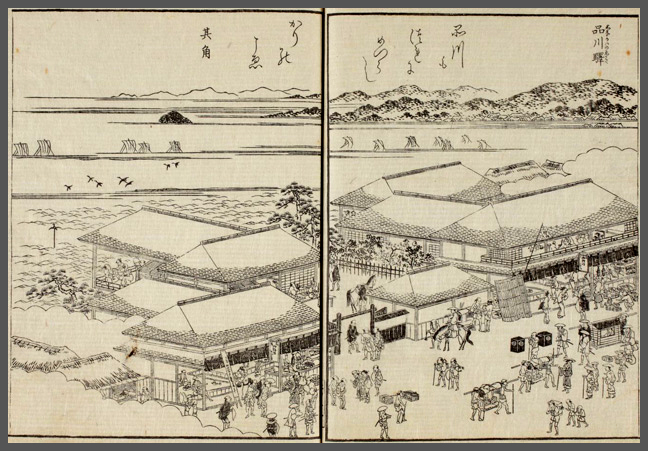
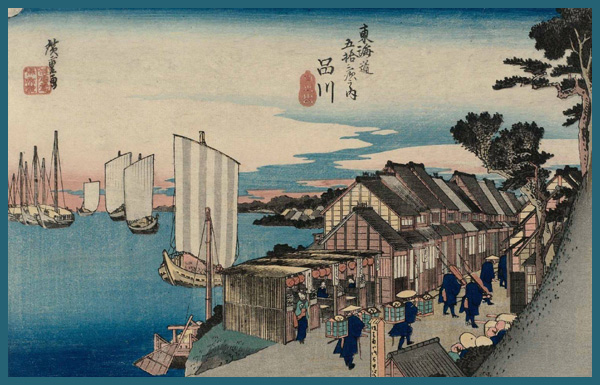
Shinagawa was the first post town a traveler would reach after setting out from Nihonbashi on the Tōkaidō highway from Edo to Kyoto. The post-town function is retained today with several large hotels near the train station offering 6,000 hotel rooms, the largest concentration in the city.
The Tokugawa shogunate maintained the Suzugamori execution grounds in Shinagawa. The Tōkaidō Shinkansen began serving Shinagawa Station from 2003, and the nearby Shinagawa Intercity office complex will be served by a new subway station in a few years' time.
. . . More in the WIKIPEDIA !

- - - - - Sub-districts
. Ebara 荏原地区 Ebara area .
. Gotanda 五反田 Gotanda district .
. Ooi, Ōi 大井 Oi district .
. Oosaki, Ōsaki 大崎 Osaki district .
. Samezu 鮫洲 "Shark sand bar" / Higashi-Oi .
. Togoshi 戸越 Togoshi district .

品川地区 - もと品川宿、天王洲・東品川の埋立地。Shinagawa, Tennozu
八潮地区 - 埋立地 - Yashio, 東八潮
- and the following
二葉 Futaba // 広町 Hiromachi // 小山 Koyama / 小山台 Koyama, Koyamadai // 勝島 Katsushima


. joonan 城南 Jonan, south of the castle area .
including the five mountains
花房山 Hanabusayama, 池田山 Ikedayama, 島津山 Shimazuyama, 御殿山 Gotenyama and 八ツ山 Yatsuyama.

.......................................................................

- - - - - Shinagawa eki 品川駅 Shinagawa station is a major railway station
in the Takanawa and Konan districts of Minato,

Gotanda Station // Meguro Station // Ōsaki Station // Ōimachi Station

- - - - - Rivers
目黒川 Megurogawa  // 立会川 Tachiaigawa

::::::::::::::::::::::::::::::::::::::::::::::::::::::::::::::::::::::::::::::::::::::::::::::::::::::::::::::::::::::::::::::::::::::::::::::::::::::::::::::::::::::::::::::::::::

- quote -
Shinagawa Post Station 品川駅
Hasegawa Settan
Shinagawa-shuku on the Tokaidō Highway was,
together with Itabashi-shuku on the Nakasendō Highway, Naito Shinjuku on the Kōshū Highway and Senju-shuku on the Nikkō/ Ōshū Highway, one of the four posts in Edo and the only one which faced the ocean.
With its scenic beauty and variety of seafood, it attracted many people from all over Edo when the view changes from season to season.
- source : Tokyo Metropolitan Library -

::::::::::::::::::::::::::::::::::::::::::::::::::::::::::::::::::::::::::::::::::::::::::::::::::::::::::::::::::::::::::::::::::::::::::::::::::::::::::::::::::::::::::::::::::::

- quote -
Shinagawa-nori 品川海苔 laver seaweed from Shinagawa
Utagawa Hiroshige II
In the 18th century, the center of Asakusa-nori production, famous as an Edo specialty,
moved from Asakusa to Shinagawa or Ōmori,
and the name of Shinagawa-nori was born.
- source : Tokyo Metropolitan Library -

::::::::::::::::::::::::::::::::::::::::::::::::::::::::::::::::::::::::::::::::::::::::::::::::::::::::::::::::::::::::::::::::::::::::::::::::::::::::::::::::::::::::::::::::::::


. The 53 stations of the Tokaido 東海道五十三次 .
1. Shinagawa-juku 品川宿 (Shinagawa) .


. Shinagawa matsuri 品川祭 Shinagawa festival .
Shinagawa Kappa matsuri 品川河童祭 Kappa festival
Shinagawa jinja 品川神社 and Ebara jinja 荏原神社

. Suzugamori keijoo 鈴ヶ森刑場 Suzugamori execution grounds .

歌川広重 Utagawa Hiroshige - Tokaido - Shinagawa

::::::::::::::::::::::::::::::::::::::::::::::::::::::::::::::::::::::::::::::::::::::::::::::::::::::::::::::::::::::::::::::::::::::::::::::::::::::::::::::::::::::::::::::::::::


. Legends and Tales from Japan 伝説 - Introduction .

................................................................................. 品川区

- quote -
The hakutaku is a wise chimerical beasts that resembles a white ox.
It has nine eyes — three on its head, and three on each of its broad sides — and six horns.
Hakutaku live in remote mountains, and only appear in eras and countries where the ruler of the land is a wise and virtuous leader. They are extremely good omens and symbols of good luck. Hakutaku can speak human languages, and are highly knowledgeable about all things in creation.
- source : yokai.com/hakutaku ..-

hakutaku 白沢 / 白澤 Hakutaku Yokai monster
At an inn in Shinagawa-shuku they had a scroll painting of the Hakutaku Yokai.


Shirazawa 白沢 (Shirasawa) is a postal station in the Utsunomiya area.
Shirazawa Jizo Hall 白沢地蔵堂


..............................................................................................................................................

hamaguri 蛤 clam shell
At the beach of 洲崎浜 Suzakihama in Shinagawa, in the eleventh lunar month,
some fishermen were peeling clam shells,
when they found one with a very small golden statue of 地蔵 Jizo Bosatsu inside,

. hamaguri 蛤 clam shell, Venus clam .

..............................................................................................................................................

. Koojin sama 荒神様 Wild Kojin Deity of the Kitchen hearth .
Once there was a large fire in a restaurant in front of Shinagawa station.
One person grabbed the small kitchen shrine for the Kojin Deity,
climbed on the roof and opened it toward the flames.
Then the wind suddenly changed
and the fire stopped just before the next house.


..............................................................................................................................................

Suigetsu Kannon 水月観音 "Water-Moon Kannon"


Temple 品川寺 Honsen-Ji
was founded in 810, when Kobo Daishi traveled in the region and gave the statue of Kannon
to the head of the 品河氏 Shinagawa clan.
It was in their possession until 品河左京亮 Shinagawa Sakyonosuke in 1395.
The statue of Suigetsu Kannon in Shinagawa later had a temple hall built by 太田道灌 Ota Dokan in 1457,
but after that the 北条氏 Hojo clan became the regent of Shinagawa.
During the fights with 武田信玄 Takeda Shingen all of Shinagawa village was burned down
and Shingen took the statue of Kannon back to his home in 甲斐 Kai (Yamanashi).
The man who had carried the Kannon, became ill with high fever and almost lost his mind. He cried:
"I am the Kannon from Shinagawa. Please bring me back as soon as possible."
So Shingen had the statue brought back and again made a temple hall for it.


- - - - - - Hosen-Ji Temple Homepage
3 Chome-5-17 Minamishinagawa, Shinagawa
- source : honsenji.net... -


. Suigetsu Kannon 水月観音 - Introduction .
Kannon Gazing at the Moon in the Water.

..............................................................................................................................................

onbyoo 怨猫 the revengeful cat
Tadano Makusu 只野真葛 (1763 - 1825) female literature teacher
只野真葛女の祖父丈庵が獅山公隠居屋敷に勤めていた時の話。久しく人の住んでいなかった山を開いて邸宅を建てたためか、移り住んだ当座はどこからともなく拳大の石が長屋に投げ込まれることがあった。昼夜の別はなかったが、特に雨降りで暗い夜などに多かった。他に宿直の侍が枕がえしをされたり、灯火が突然消えたり、蚊帳の釣り手が一度に切れて落ちたりすることもあった。
ある時、典医の丈庵が命ぜられて宿直をしていると堪らなく眠くなった。それでも何とか薄目で見ていると大きい猫か狸のような獣が現れ、途端に蚊帳の釣り手が一度に切れた。以後は何事もなかった。翌日は昼夜時々鉄砲を撃たせて威嚇したが、日中二度ほど大犬程で尻尾の太い赤毛のものが庭前の林の梢をとび渡った。
鉄砲を浴びせたが、逃げ回って姿を消してしまった。その後このような怪事は減少したが、ある時御長屋門の下の辺に犬くらいの猫が眠っていたので、近侍の者が鉄砲で打ち殺した。
この辺りは特に野良猫が多い所であった。

A monster like a Tanuki or a cat with red hair 猫か狸のような獣 . . .
. bakeneko 化け猫 / 化猫と伝説 Legends about monster cats .

..............................................................................................................................................

- reference : nichibun yokai database -

::::::::::::::::::::::::::::::::::::::::::::::::::::::::::::::::::::::::::::::::::::::::::::::::::::::::::::::::::::::::::::::::::::::::::::::::::::::::::::::::::::::::::::::::::::


- - - To join me on facebook, click the image !

:::::::::::::::::::::::::::::::::::::::::::::::::::::::::::::::::::::::::::::::::::::::::::::::::::::::::::::::::::::::::::::::::::::::::::::::::::::::::::::::::::::::::::::::::::::


. Edo bakufu 江戸幕府 The Edo Government .

. Famous Places and Powerspots of Edo 江戸の名所 .

. Doing Business in Edo - 商売 - Introduction .

. Japanese Architecture - The Japanese Home .

. Interior Design - The Japanese Home .

. Legends and Tales from Japan 伝説 - Introduction .


[ . BACK to DARUMA MUSEUM TOP . ]
[ . BACK to WORLDKIGO . TOP . ]
- - - - - #shinagawa #shinagawaku #hakutaku - - - -
::::::::::::::::::::::::::::::::::::::::::::::::::::::::::::::::::::::::::::::::::::::::::::::::::::::::::::::::::::::::::::::::::::::::::::::::::::::::::::::::::::::::::::::::::::

7/16/2018

Shinbashi, Shimbashi district Minato

[ . BACK to DARUMA MUSEUM TOP . ]
. Famous Places and Powerspots of Edo 江戸の名所 .
::::::::::::::::::::::::::::::::::::::::::::::::::::::::::::::::::::::::::::::::::::::::::::::::::::::::::::::::::::::::::::::::::::::::::::::::::::::::::::::::::::::::::::::::::::
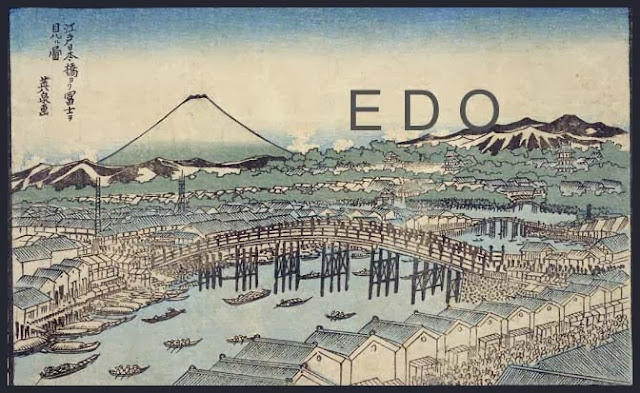
Shinbashi, Shimbashi 新橋 "new bridge" district, Minato
Nishi-Shinbashi, Higashi-Shinbashi


- quote
... located south of Ginza, west of Tsukiji, east of Toranomon and north of Hamamatsucho.
- - - - - History
The area was the site of a bridge built across the 汐溜川 Shiodome River in 1604.
The original name of the bridge was 芝口橋 Shibaguchibashi.
The river was later filled in. Shinbashi was the Tokyo terminus of the first railway in Japan in 1872. It remains a major railway hub and has since developed into a commercial center, most recently with the construction of the Shiodome "Shiosite" high-rise office complex.
- source : wikipedia

.......................................................................

- quote -
Shinbashi is the salarymen capital of Tokyo; so that means one thing—it’s full of people and it’s one of the most hectic parts of the city come rush hour. Outside of the commute, it’s a hub for some of the most rustic izakaya in the city and boasts great entertainment. With its super central location and heap of bars that are well dispersed over the area, it’s a popular hangout spot. Shinbashi also happens to be home of the oldest ‘pink cinemas’ which started the beginning of the very successful porn industry in Japan.
On a very different note, Shinbashi is also known for being Tokyo’s first railway terminal.
- source : tokyo cheapo -


::::::::::::::::::::::::::::::::::::::::::::::::::::::::::::::::::::::::::::::::::::::::::::::::::::::::::::::::::::::::::::::::::::::::::::::::::::::::::::::::::::::::::::::::::::


. Tamura Kooji 田村小路 Tamura Koji Alley district .
港区 Minato Shinbashi 新橋 3rd and 4th district, 西新橋 Nishi-Shinbashi second district

.......................................................................

. Azuma odori 東踊 Azuma Dance .
and the Geisha of Shinbashi

. Temple 身代山 Migawari san 玉泉寺 Gyokusen-Ji  鏡照院 Kyosho-In .
港区西新橋3-14-3 / 3 Chome-14-3 Nishi-Shinbashi, Minato ward


::::::::::::::::::::::::::::::::::::::::::::::::::::::::::::::::::::::::::::::::::::::::::::::::::::::::::::::::::::::::::::::::::::::::::::::::::::::::::::::::::::::::::::::::::::

- - - - - H A I K U and S E N R Y U - - - - -


新橋の驛前夜寒のサンドヰッチマン
Shinbashi no eki mae yosamu no sandowitchiman

Shinbashi
in front of the station in the night cold
the sandwichman


新橋の飲屋路地裏走り梅雨

高澤良一 Takazawa Ryoichi


::::::::::::::::::::::::::::::::::::::::::::::::::::::::::::::::::::::::::::::::::::::::::::::::::::::::::::::::::::::::::::::::::::::::::::::::::::::::::::::::::::::::::::::::::::


- - - To join me on facebook, click the image !

:::::::::::::::::::::::::::::::::::::::::::::::::::::::::::::::::::::::::::::::::::::::::::::::::::::::::::::::::::::::::::::::::::::::::::::::::::::::::::::::::::::::::::::::::::::

. Minato ku 港区 Minato ward, "Harbour ward" .
.Shiba Area 芝 / 柴村 Shiba mura / 芝町 Shiba machi district 


. Edo bakufu 江戸幕府 The Edo Government .

. Famous Places and Powerspots of Edo 江戸の名所 .

. Doing Business in Edo - 商売 - Introduction .

. shokunin 職人 craftsman, craftsmen, artisan, Handwerker .

. senryu, senryū 川柳 Senryu poems in Edo .

. Japanese Architecture - The Japanese Home .

. Interior Design - The Japanese Home .

. Legends and Tales from Japan 伝説 - Introduction .


[ . BACK to DARUMA MUSEUM TOP . ]
[ . BACK to WORLDKIGO . TOP . ]
- - - - - #shinbashi #shimbashi - - - -
::::::::::::::::::::::::::::::::::::::::::::::::::::::::::::::::::::::::::::::::::::::::::::::::::::::::::::::::::::::::::::::::::::::::::::::::::::::::::::::::::::::::::::::::::::