5/10/2017

Yagyu clan legends

[ . BACK to DARUMA MUSEUM TOP . ]
. Persons and People of Edo - Personen .
::::::::::::::::::::::::::::::::::::::::::::::::::::::::::::::::::::::::::::::::::::::::::::::::::::::::::::::::::::::::::::::::::::::::::::::::::::::::::::::::::::::::::::::::::::

The Yagyu clan and legends 柳生一族と伝説


Yagyū "Sekishūsai" Munetoshi 柳生 石舟斎 宗厳 (1529 - 1606)
- His son,
Yagyū Munenori 柳生宗矩 (1571 – 1646)
- Munenori's sons,
Yagyū Jūbei Mitsuyoshi 柳生 十兵衞 三厳 (Yagyu Jubei) (1607 - 1650)
and Yagyū Munefuyu 柳生宗冬 (1613 - 1675)
- details in the wikipedia -

.......................................................................

Yagyū Shinkage-ryū 柳生新陰流 Yagyu school of swordsmanship


新陰流兵法目録事 Shinkageryu Heiho Mokuroku no Koto

one of the oldest Japanese schools of swordsmanship (kenjutsu). Its primary founder was Kamiizumi Nobutsuna, who called the school Shinkage-ryū.
In 1565, Nobutsuna bequeathed the school to his greatest student, Yagyū Munetoshi, who added his own name to the school.
- More in the wikipedia ! -


::::::::::::::::::::::::::::::::::::::::::::::::::::::::::::::::::::::::::::::::::::::::::::::::::::::::::::::::::::::::::::::::::::::::::::::::::::::::::::::::::::::::::::::::::::

. Legends and Tales from Japan 伝説 - Introduction .

................................................................................. Tochigi 栃木県

Yagyu Jubei and the 妖怪 Yokai appearance
When Jubei stayed over night at the temple for the 10 Kings of Hell, 日光の十王堂 Juo-Do in Nikko,
late at night 閻羅王 Enma, the King of Hell, came out and asked him the time.
Jubei kept his cool, just told him the time and went back to sleep.

Hall for the 10 Kings of Hell

- reference source : travel-way.net/987.nikkou.juuoudou -


. Juu Oo 十王, Juo, Ju-O - 10 Ten Kings of Hell .
- Introduction -


................................................................................. Nara 奈良県
Nara is the homeground of the Yagyu clan - 柳生の里 Yagyu no Sato

saru 猿 monkey
Yagyu Munenori Tajima no Kami 柳生但馬守 kept four monkeys. He taught them how to fight with a sword.
They were quite diligent and soon became great masters. They would easily win against the unskillful disciples of Munenori.

.......................................................................
奈良市 Nara town


At the shrine 天石立神社 Amanoiwatate Jinja, the famous samurai
柳生 石舟斎 宗厳 Yagyu "Sekishūsai" Munetoshi (1527 - 1606) practised martial arts. Night after night a Tengu was his partner. Once he thought he had cut the Tengu, but when he looked closer the next morning, there was only a huge rock with a cut.
This is the Ittoseki 一刀石.
Scratches of the Tengu's nails 天狗の爪痕 are still seen on the stone to our day -
if you look closely.


. tengu no tsume 天狗の爪 tengutsume 天狗爪 nails of a Tengu .

..............................................................................................................................................


the village 大柳生町 Oyagyuson - part of it is 柳生村 Yagyuson

In the north of the Shrine 山口神社 Yamaguchi Jinja is a forest called
Yanagi no Mori 柳の森 Willow Forest.


source : mag-net . 柳生の里

Once upon a time
there was a huge willow tree, reaching almost to the sky. This is the origin of the village name
"village of the huge willow tree".
Legend knows that when 弘法大師 Kobo Daishi passed here, he rammed his tsue 杖 walking staff in the ground and it begun to grow.
During the construction of 京都の三十三間堂 the Sanjusan Gendo Hall in Kyoto they needed large trees and this willow was to be cut down. Many workers came to help carry it away, but it would not move an inch. Suddenly out of nowhere a small man begun to sing a festival song - and indeed, now the tree could be moved easily.

. tsue 杖と伝説 Legends about the walking staff of Kobo Daishi . .

.......................................................................

There are some fox legends from this village, but not related to the Yagyu clan.
. kitsune densetsu 狐 伝説 fox legends .
akuta 悪田の狐 fox from Akuta

..............................................................................................................................................

- reference : nichibun yokai database -
- reference source : mag-net.ne.jp/public/travel/japan/memory - 柳生の里

::::::::::::::::::::::::::::::::::::::::::::::::::::::::::::::::::::::::::::::::::::::::::::::::::::::::::::::::::::::::::::::::::::::::::::::::::::::::::::::::::::::::::::::::::::


武家諸法度の陰に柳生あり Yagyu in the Shadow of the Laws for Samurai
週刊江戸全国版

. Buke shohatto 武家諸法度 lit. Various Points of Laws for Warrior Houses .


::::::::::::::::::::::::::::::::::::::::::::::::::::::::::::::::::::::::::::::::::::::::::::::::::::::::::::::::::::::::::::::::::::::::::::::::::::::::::::::::::::::::::::::::::::


- - - - - H A I K U and S E N R Y U - - - - -

笹子くる柳生一族眠る墓
sasako kuru Yagyuu ichizoku nemuru haka

nightingale come -
the graves where the Yagyu clan
finds its sleep

Tr. Gabi Greve

松本幸子 Matsumoto Sachiko

. WKD : sasako 笹子 nightingale . .
- - kigo for all winter - -
笹子 also read sasago


At the Yagyu family temple, 芳徳寺 Hotoku-Ji in Nara
奈良県奈良市柳生下町445 / Nara-shi, Yagyū Shimochō, 445

.......................................................................

Yagyuu michi 柳生道, Yagyuu Kaidoo 柳生街道 the Yagyu Road


Hiking the Yagyu Kaido
A samurai trail in Kasuga Mountain's Primeval Forest

The trail was constructed during samurai times and connects Kasuaga Shrine and Nara City with the sword making village of Yagyu in the east of the prefecture.
- source : en.japantravel.com/nara -


引売りの酢茎を買へり柳生道
佐々木美代子

柳生道浮びおちいり山眠る
井沢正江

芋茎をほして小字や柳生みち
金久美智子


::::::::::::::::::::::::::::::::::::::::::::::::::::::::::::::::::::::::::::::::::::::::::::::::::::::::::::::::::::::::::::::::::::::::::::::::::::::::::::::::::::::::::::::::::::


- - - To join me on facebook, click the image !

:::::::::::::::::::::::::::::::::::::::::::::::::::::::::::::::::::::::::::::::::::::::::::::::::::::::::::::::::::::::::::::::::::::::::::::::::::::::::::::::::::::::::::::::::::::

. Famous Places and Powerspots of Edo 江戸の名所 .

. Edo bakufu 江戸幕府 The Edo Government .

. Doing Business in Edo - 商売 - Introduction .

. shokunin 職人 craftsman, craftsmen, artisan, Handwerker .

. senryu, senryū 川柳 Senryu poems in Edo .

. Japanese Architecture - Interior Design - The Japanese Home .

. Legends and Tales from Japan 伝説 - Introduction .


[ . BACK to DARUMA MUSEUM TOP . ]
[ . BACK to WORLDKIGO . TOP . ]
- - - - - #yagyu #yagyushinkageryu - - - -
::::::::::::::::::::::::::::::::::::::::::::::::::::::::::::::::::::::::::::::::::::::::::::::::::::::::::::::::::::::::::::::::::::::::::::::::::::::::::::::::::::::::::::::::::::

4/26/2017

Honzaimokucho district

[ . BACK to DARUMA MUSEUM TOP . ]
. Famous Places and Powerspots of Edo 江戸の名所 .
::::::::::::::::::::::::::::::::::::::::::::::::::::::::::::::::::::::::::::::::::::::::::::::::::::::::::::::::::::::::::::::::::::::::::::::::::::::::::::::::::::::::::::::::::::

Honzaimokuchoo, Hon-Zaimokuchō 本材木町 Honzaimokucho, Honzaimoku-cho district
Chuo ward. 中央区京橋一~三丁目 Kyobashi first to third sub-district
- Fuyukicho, see below

zaimoku 材木 wood for construction work, lumber, timber
zaimoku shoonin 材木商人 dealers in timber
zaimokudonya, zaimokudoya 材木問屋 timber brokers

Since fires were quite frequent in Edo, the provision of construction wood was essential.
. taika 江戸の大火 Edo no Taika "Great Fires of Edo" .

Timber was transported on boats, so the district is located from Nihonbashi along the river Kaedegawa 楓川 with eight sub-districts along 2 km.
Kaedegawa is now Nihonbashi 3-chome.

To make a difference to Nihonbashi, it was also called 新肴場 Shinsakanaba.


In the beginning, the construction of Edo castle called for a lot of timber to be transported to the town. Also the building of homes for the many new citizens needed timber.
A lot was brokered by timber merchants from Suruga (Shizuoka) and 遠江 Totomi, called in by Tokugawa Ieyasu himself.
They first lived at 道三堀 Dosanbori and八重洲岸 Yaesugishi and were soon moved along the Western side of the Kaedegawa embankment.
The area is now filled in and became the 首都高速都心環状線 Inner Circular Route.

During the Edo period, there were many bridges crossing Kaedegawa.
One of them was 海運橋 Kaiunbashi.
- - - see the WIKIPEDIA for details !


source : 大江戸歴史散歩を楽しむ会

Since 1647, there was an overseer of construction materials for the Shogun's properties
Zaimoku-ishi bugyō 材木石奉行 Saimoku Ishi Bugyo - Bugyo for timber and stones


海運橋と第一国立銀行 Kaiunbashi bridge and the first national bank
中央左に日本橋川に架かる江戸橋、右に西堀留川に架かる荒布橋、左下に楓川に架かる海運橋が見える。
- reference source : 大江戸歴史散歩を楽しむ会 -

..............................................................................................................................................

Shirandoo 芝蘭堂 Shirando Academy
the first private school for rangaku 蘭学 Dutch learning
founded in Honzaimokucho by
. Otsuki Gentaku 大槻玄沢 (1757 - 1827) .


芝蘭堂新元会図 - Waseda University Library

..............................................................................................................................................

本材木町処刑場跡 Honzaimokucho Keijo - execution ground
was relocated to Shibaguchi.


This is the look of the area today.

. Criminal Punishment in Edo .
keijoo, keijō 刑場 execution ground

::::::::::::::::::::::::::::::::::::::::::::::::::::::::::::::::::::::::::::::::::::::::::::::::::::::::::::::::::::::::::::::::::::::::::::::::::::::::::::::::::::::::::::::::::::

Zaimoku Kawagishi 材木河岸 "timber embankment"


zaimokudonya, zaimokudoya 材木問屋 timber brokers

In the beginning there were four big groups
板材木問屋 Itazaimokudoia
熊野問屋 Kumanodoia
川辺問屋 Kawabedoia (炭薪問屋 - also dealing in coal and firewood )
木場材木問屋 Kiba zaimokudoia


In 1701 they were concentrated in 深川木場 Fukagawa kiba. They merged in the course of time and finally there were only
板材木熊野問屋 and 木場材木問屋

. Kiba 木場 "place for wood" .
Lumberyards and Carpenters
on the east bank of the Sumida river.

::::::::::::::::::::::::::::::::::::::::::::::::::::::::::::::::::::::::::::::::::::::::::::::::::::::::::::::::::::::::::::::::::::::::::::::::::::::::::::::::::::::::::::::::::::


Fuyukichoo 冬木町 Fuyuki district
Kōtō 江東区 Koto ward
Close to 仙台堀川 Sendai Horikawa. Fuyuki literally means "winter trees".


Fuyukiya 冬木屋 was a lumber merchant. The first Fuyuki had come from Gunma. His name was 上田直次 Ueno Naoji. The third owner was 冬木屋弥平次 Fuyukiya Yaheiji, who established a large lumber yard here.
In 1705 Fuyukiya Yaheiji became the head man of district, which was then named after him.


冬木弁天堂 Fuyuki Benten was the shrine of the Fuyuki family.
. Edo roku Benten 江戸六弁天 Six famous Benten in Edo - Fuyuki .


- quote -
Fuyuki Kosode 冬木 小袖 (Garment with small wrist openings) Autumn grass design on white twill ground
Hand-painted by Ogata Korin
Ogata Korin (1658–1716) left from Kyoto for Edo (now Tokyo) in 1704. The first people with whom Korin lived in Edo were the Fuyuki family, who were lumber dealers in Fukagawa. This garment is said to have been created for Mrs. Fuyuki as a token of his appreciation for the hospitality he had received.
At the time, kosode garments painted by famous artists on special orders were in fashion among women in affluent merchant families.
- source : colbase.nich.go.jp/collectionItems... -


- quote -
- The value of Onjoji
A merchant of Edo, Fuyuki by name, had desired to obtain the Onjoji flower container. Jisen had purchased it for eight hundred ryo, but...
Stories from a Tearoom Window: Lore and Legends of the Japanese Tea Ceremony
By Shigernori Chikamatsu
- source : google books -

::::::::::::::::::::::::::::::::::::::::::::::::::::::::::::::::::::::::::::::::::::::::::::::::::::::::::::::::::::::::::::::::::::::::::::::::::::::::::::::::::::::::::::::::::::


The Lumber Industry in Early Modern Japan
Conrad D. Totman

- quote -
This concise volume surveys three hundred years in the history of the lumber industry in early modern (Tokugawa) Japan. In earlier works, Conrad Totman examined environmental aspects of Japan's early modern forest history; here he guides readers through the inner workings of lumber provision for urban construction, providing a wealth of detail on commercial and technological systems of provision while focusing on the convoluted commercial arrangements that moved timber from forest to city despite exceptionally severe environmental and financial obstacles.
Based on scrupulous scholarship in the vast Japanese secondary literature on forest history, The Lumber Industry in Early Modern Japan brings to light materials previously unavailable in English and synthesizes these within a thoughtful ecological framework. Its penetrating examination of the patterns of cooperation and conflict throughout the industry adds significantly to the scholarly corpus that challenges the stock image of Tokugawa rulers and merchants as social enemies. Instead it supports the view of those who have noted the interdependent character of political and economic elites and the long-term strengthening of rural sectors of society vis-a-vis urban sectors.
- - - - - Contents

1. English-Language Approaches to Tokugawa Commerce
2. An Overview of Lumber Provisioning
3. The Process of Timber Transport
4. Entrepreneurial Lumbering in Yamaguni
5. Last Reflections
App. A Plant Species
App. B Table of Measurements
App. C Yoshino Ringyo: A Research Topic.
- source : trove.nla.gov.au/work -

.......................................................................


The Green Archipelago: Forestry in Preindustrial Japan
Conrad D. Totman

Professor Totman raises the critical question of how Japan s steeply mountainous woodland has remained biologically healthy despite centuries of intensive exploitation by a dense human population that has always been dependent on wood and other forest products. Mindful that in global terms this has been a rare outcome, and one that bears directly on Japan s recent experience as an affluent, industrial society, Totman examines the causes, forms, and effects of forest use and management in Japan during the millennium to 1870.
He focuses mainly on the centuries after 1600 when the Japanese found themselves driven by their own excesses into programs of woodland protection and regenerative forestry.
source : amazon.co.jp

::::::::::::::::::::::::::::::::::::::::::::::::::::::::::::::::::::::::::::::::::::::::::::::::::::::::::::::::::::::::::::::::::::::::::::::::::::::::::::::::::::::::::::::::::::

. Legends and Tales from Japan 伝説 - Introduction .
zaimoku 材木 timber, lumber


................................................................................. Aichi 愛知県
南設楽郡 Minamishitara district

ryuuguu 龍宮 Ryugu Dragon Palace

二ノ滝という滝がある。この滝のため鮎が段嶺にまで上らないので、段嶺の城主が岩を割り砕こうとしたら、夢で龍宮のお告げがあったので計画を中止した。また、材木商が材木を上流から流したらこの滝に入ったまま浮かんでこないので、中にもぐって竜王に奪わないように訴えた。家に戻ってみると、3時ぐらいだと思っていたのに、家では三周忌の最中だった。


..............................................................................................................................................

- reference : nichibun yokai database -
zaimoku 材木 71 to explore (01)

::::::::::::::::::::::::::::::::::::::::::::::::::::::::::::::::::::::::::::::::::::::::::::::::::::::::::::::::::::::::::::::::::::::::::::::::::::::::::::::::::::::::::::::::::::


- - - To join me on facebook, click the image !

:::::::::::::::::::::::::::::::::::::::::::::::::::::::::::::::::::::::::::::::::::::::::::::::::::::::::::::::::::::::::::::::::::::::::::::::::::::::::::::::::::::::::::::::::::::

. Kōtō 江東区 Koto ward, "East River" .

. Famous Places and Powerspots of Edo 江戸の名所 .

. Doing Business in Edo - 商売 - Introduction .

. shokunin 職人 craftsman, craftsmen, artisan, Handwerker .

. senryu, senryū 川柳 Senryu poems in Edo .

. Japanese Architecture - Interior Design - The Japanese Home .

. Edo bakufu 江戸幕府 The Edo Government .

. Legends and Tales from Japan 伝説 - Introduction .


[ . BACK to DARUMA MUSEUM TOP . ]
[ . BACK to WORLDKIGO . TOP . ]
- - - - - #honzaimokucho #zaimoku #timberedo #lumberedo - - - -
::::::::::::::::::::::::::::::::::::::::::::::::::::::::::::::::::::::::::::::::::::::::::::::::::::::::::::::::::::::::::::::::::::::::::::::::::::::::::::::::::::::::::::::::::::

4/12/2017

ondo dance game

[ . BACK to DARUMA MUSEUM TOP . ]
. Doing Business in Edo - 商売 - Introduction .
::::::::::::::::::::::::::::::::::::::::::::::::::::::::::::::::::::::::::::::::::::::::::::::::::::::::::::::::::::::::::::::::::::::::::::::::::::::::::::::::::::::::::::::::::::

ondo 音頭 popular song, music and dance


- quote -
The literal translation of "ondo" is "sound head." Kanji, or the Chinese characters used in the Japanese language, often have literal and abstract meanings, here the kanji for "sound" (音-on) having a more abstract meaning of "melody" or "music," and the kanji for "head," (頭) having a more abstract meaning of "beat," "base pattern." Hence "ondo" probably refers to a kind of "sound" or "beat pattern."
There are other names used to describe older Japanese genres of music. For example, "fushi" or "bushi" (節), with its literal meaning of "node," "knuckle," or "joint," refers to the nodes found in bamboo, usually found at a steady sequence. Thus "fushi" can also have the abstract idea of "sequence" to refer to notes and beats in a sequence, i.e., a melody.
An "ondo," however,
usually refers to a kind of song with a distinct swung 2/2 rhythm. This "swing" can be referred to as "ukare" in Japanese. "Ondo" is a term used in older Japanese genres, but it is still used today when referring to songs written in this swinging style. Sometimes the rhythm is NOT swung and it is played straight through. This is called "kizami".

Folk music and Obon
Part of the Japanese Obon celebration involves participating in the local community dance. The tradition of the Bon dance, or Bon odori (盆踊り), dates back a few hundred years, and it is usually accompanied by the local tune. In recent times, new music has been used for Bon dance accompaniment, including late enka hits and music written specifically for bon dancing. The "ondo" rhythm has always been common in Japanese folk music, but even the newer music written for Bon dances has been written in this style. ...
- - - More in the WIKIPEDIA !


::::::::::::::::::::::::::::::::::::::::::::::::::::::::::::::::::::::::::::::::::::::::::::::::::::::::::::::::::::::::::::::::::::::::::::::::::::::::::::::::::::::::::::::::::::


Ondo ken おんどけん Dancing Ken Game

Actor Nakamura Utaemon IV as a Toad playing the Shamisen 
四代目中村歌右衛門の蛙,
Utagawa Kunimaro I (active about 1850–1875), signed Ikkokusai Kunimaro giga 一国斎国麿戯画


::::::::::::::::::::::::::::::::::::::::::::::::::::::::::::::::::::::::::::::::::::::::::::::::::::::::::::::::::::::::::::::::::::::::::::::::::::::::::::::::::::::::::::::::::::

- - - - - H A I K U and S E N R Y U - - - - -

草川の水の音頭も春祭
kusakawa no mizu no ondo mo haru matsuri

the sound
of water and plants
like a spring festival

Tr. Gabi Greve

. Fujita Sooshi 藤田湘子 Fujita Soshi .
(1926 - 2005)

.......................................................................


夜桜に青侍が音頭かな
yosakura ni aozamurai ga ondo kana

under cherry blossoms at night
the songs and dance
of young Samurai . . .


高井几董 Takai Kito

aozamurai (aosamurai) is a young Samurai of lower rank.
... a fifth-rank Samurai who serves for a royal family or a court noble.


::::::::::::::::::::::::::::::::::::::::::::::::::::::::::::::::::::::::::::::::::::::::::::::::::::::::::::::::::::::::::::::::::::::::::::::::::::::::::::::::::::::::::::::::::::


- - - To join me on facebook, click the image !

:::::::::::::::::::::::::::::::::::::::::::::::::::::::::::::::::::::::::::::::::::::::::::::::::::::::::::::::::::::::::::::::::::::::::::::::::::::::::::::::::::::::::::::::::::::

. Edo bakufu 江戸幕府 The Edo Government .

. Famous Places and Powerspots of Edo 江戸の名所 .

. Doing Business in Edo - 商売 - Introduction .

. shokunin 職人 craftsman, craftsmen, artisan, Handwerker .

. senryu, senryū 川柳 Senryu poems in Edo .

. Japanese Architecture - Interior Design - The Japanese Home .

. Legends and Tales from Japan 伝説 - Introduction .


[ . BACK to DARUMA MUSEUM TOP . ]
[ . BACK to WORLDKIGO . TOP . ]
- - - - - #ondoken #ondodance #dancegame - - - -
::::::::::::::::::::::::::::::::::::::::::::::::::::::::::::::::::::::::::::::::::::::::::::::::::::::::::::::::::::::::::::::::::::::::::::::::::::::::::::::::::::::::::::::::::::

4/06/2017

Koganei district

[ . BACK to DARUMA MUSEUM TOP . ]
. Famous Places and Powerspots of Edo 江戸の名所 .
::::::::::::::::::::::::::::::::::::::::::::::::::::::::::::::::::::::::::::::::::::::::::::::::::::::::::::::::::::::::::::::::::::::::::::::::::::::::::::::::::::::::::::::::::::
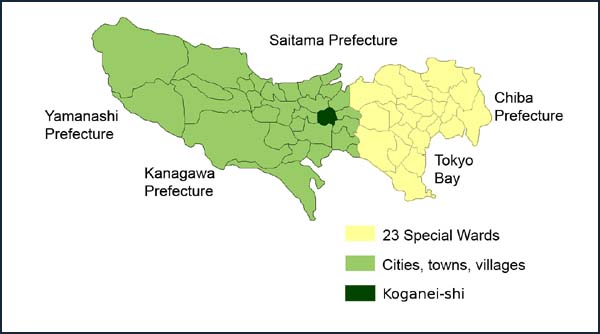
Koganei 小金井 Koganei district
Koganeimura 小金井村 Koganei mura village

lit. small gold well


.......................................................................


【江戸へタイムトリップ!玉川上水と江戸の歴史を探る】
こがねいてくてく歴史散策! Walk through the history of Koganei !
小金井まち歩きマップ
- reference source : shitteru-koganei.net... -

..............................................................................................................................................

Koganei was a famous spot for hanami 花見 cherry blossom viewing.


「小金井の桜」Koganei no sakura
広重 Ando Hiroshige

- quote -
Koganei-sakura of the East Capital 東都小金井さくら
A row of sakura (cherry trees) along the Tamagawa aqueduct known as Koganei-zakura were planted around 1737
when Musashino Shinden was being developed,
on the both banks of the Tamagawa aqueduct around Koganei bridge as its center,
over a distance of about 6 kilometers.
For this, best breeds of wild cherry trees were purchased
from Yoshino (Nara Prefecture) and Sakuragawa (Ibaraki Prefecture).
This area was known as one of the prominent spots for "sakura (cherry blossom) viewing" in Edo since the late 18th century.
- source : Tokyo Metropolitan Library -

.......................................................................

- quote -
Sakura (Cherry Blossoms) on the Banks of Tama River
This work depicts sakura (cherry blossom) trees along the Tamagawa aqueduct,
which supplied water to the city of Edo.
It is thought to show what is now the vicinity of the main gate of Shinjuku Imperial Garden.
The rows of cherry trees planted in February 1956 were well received,
but the Shogunate took notice of the fact that these cherry trees were designated as “official trees”
and ordered their removal in March of the same year.
- source : Tokyo Metropolitan Library -

.......................................................................

Spring View of Koganei-bashi bridge 小金井橋 春景
The cherry trees in Koganei, totaling around 10,000 trees at their peak,
start to blossom on the 54th or 55th day from the first day of spring
according to the lunar calendar, and reach full blossom on the 60th day.
Especially, sakura planted around the Koganei bridge on the banks of the Tamagawa aqueduct
seems to have been the most beautiful.
- source : Tokyo Metropolitan Library -

.......................................................................

Koganei-bashi bridge 小金井橋
The Koganei-bashi bridge was built across the 玉川上水 Tamagawa aqueduct.
It is said that the name comes from the famous water of Koganei nearby, one of the seven wells in Musashi.
Koganei became one of the best spots for sakura (cherry blossom) viewing in Edo
towards the end of the 18th century and many people visited the area.
The Koganei-bashi bridge was originally a timber bridge, which was easily damaged and needed to be rebuilt frequently.
The inhabitants of the area around the bridge, who had taken pain for financing the repair costs,
each contributed their funds and in 1856 (the third year of Ansei), finally built the stone bridge that they longed for.
- source : Tokyo Metropolitan Library -

.......................................................................

Chōfu Tamagawa 調布玉川ノ景 Chofu
In the Nara period, clothes woven in the area along the Tama River were dedicated to the Imperial Court
as 調 "chō," part of the public levy.
Some say that this is the origin of the place name 調布 Chōfu.
The goods labeled as 美艶仙女香 "biensenjo-kō" on the left are face powder that was popular in the city of Edo.
It is also known that the distributor of this powder had the product inserted in ukiyo-e and was advertizing it.
- source : Tokyo Metropolitan Library -

. Choofu 調布村 Chofu mura, Chofu village . / Denenchōfu 田園調布

..............................................................................................................................................

Tokyo Open Air Architectural Museum, Koganei
江戸東京たてもの園 Edo-Tokyo Tatemono-en

Dedicated to the architecture of the late Edo period, this outdoor museum showcases historic buildings.


- quote -
The Edo-Tokyo Open Air Architectural Museum is an open air museum in the western suburbs of Tokyo, which exhibits a range of historic buildings from the Tokyo area. The buildings were relocated or reconstructed here in order to preserve a chapter of architectural history, which has been almost completely lost in fires, earthquakes, wars and city redevelopment.

Most of the buildings exhibited are from the Meiji Period (1868-1912) or more recent times, and include among others, a politician's elegant former residence, a farm house, a public bathhouse, various shops and a police box.
The Edo-Tokyo Open Air Architectural Museum is a branch museum of the superb Edo-Tokyo Museum in Tokyo's Ryogoku district.
The open air museum is located in the western part of Koganei Park, Koganei City, 25 minutes west of Tokyo's Shinjuku Station by train.
- source : japan-guide.com/e... -

- Homepage of the Museum -
- source : tatemonoen.jp/english -

- Restoration Buildings - Introduction
- source : tatemonoen.jp/english/restore -

..............................................................................................................................................

. Edo dentoo yasai 江戸伝統野菜 Traditional vegetables of Edo .


Most is now grown in hothouses near the homes of the farmers in Koganei and used for bringing life back into the community (machiokoshi).

nagakabu 長カブ long turnips
. . . CLICK here for Photos !

noraboona のらぼう菜 leafy vegetable
. . . CLICK here for Photos !

ookura daikon 大蔵大根(おおくらだいこん)extra large radish
It grows up to 50 cm lenght and is very compact. Good for boiling, since it does not change its form.
. . . CLICK here for Photos !

shintorina しんとりな / しんとり菜 leafy stem vegetable
. . . CLICK here for Photos !


::::::::::::::::::::::::::::::::::::::::::::::::::::::::::::::::::::::::::::::::::::::::::::::::::::::::::::::::::::::::::::::::::::::::::::::::::::::::::::::::::::::::::::::::::::

Koganei Jinja 小金井神社 Koganei Shrine
4-7-2 Nakacho, Koganei 184-0012, Tokyo


The deity in residence is Sugawara no Michizane, hence the name
Tenman-gu 天満宮.
. Sugawara Michizane 菅原道真 .

- HP of the shrine
Tenmangu Koganei Jinja
東京都小金井市中町4-7-2
- reference source : koganeijinja.com... -

::::::::::::::::::::::::::::::::::::::::::::::::::::::::::::::::::::::::::::::::::::::::::::::::::::::::::::::::::::::::::::::::::::::::::::::::::::::::::::::::::::::::::::::::::::

. Tama Shikoku Henro 多摩四国八十八箇所 Pilgrimage .
Two temples are located in 金井市 Koganei:

30 Shinmyooji 真明寺 Shinmyo-Ji and 31 天神山 Konzoo-In 金蔵院 Konzo-In

::::::::::::::::::::::::::::::::::::::::::::::::::::::::::::::::::::::::::::::::::::::::::::::::::::::::::::::::::::::::::::::::::::::::::::::::::::::::::::::::::::::::::::::

Nr. 30 - Shinmyooji 真明寺 Shinmyo-Ji
- 貫井山 妙音院 真明寺 Shinmyo-Ji
小金井市貫井南町3-8-4 / Tōkyō-to, Koganei-shi, Nukui-Minamichō
Shingon Sect : 豊山派


This temple was founded in 1539 by 阿闍梨海宥 priest Kaiyu Ajari.
The main statue is 胎蔵界大日如来 Dainichi Nyorai.

延宝6年(1678)尊祐法師が当地へ移転させたといいます。
貫井山妙音院といい、大日如来を本尊とする。創立の年月は明らかでないが、妙光院の記録によれば永禄12年(1539)阿闍梨海宥を中興の祖とする。それから百余年の後、延宝6年(1678)3月、尊祐法師が貫井字中前にあった寺を除地勧請し、いまの貫井保育園地内にあった大日堂と合併して、現在の地に移転建立したという。尊祐法師を再興の祖としている。
『新編武蔵風土記稿』に「真明寺 境内除地七段二十二歩、村の北にあり。貫井山と号す。新義真言宗府中妙光院末。客殿六間に五間。本尊大日、木の坐像、長さー尺。開山開基詳らかならず」と記載されてある。(「小金井市史」より)

.......................................................................

- 朱印 - stamp of the temple :


- Homepage of the temple
- source : tesshow.jp/tama/koganeikokbunji


. Introduction of Dainichi Nyorai .

::::::::::::::::::::::::::::::::::::::::::::::::::::::::::::::::::::::::::::::::::::::::::::::::::::::::::::::::::::::::::::::::::::::::::::::::::::::::::::::::::::::::::::::

Nr. 31 - Kinzoo-In 金蔵院 Kinzo-In
- 天神山 金蔵院 Kinzo-In 観音寺 Kannon-Ji
小金井市中町4-13-25 / Tōkyō-to, Koganei-shi, Nakachō,
Shingon Sect : 豊山派


This temple was founded by 阿闍梨堯存 priest Ajari. He died in 1566.
The main statue is 十一面観世音菩薩 Kannon with 11 heads .

The temple was related to 天満宮- 小金井神社 Tenmangu Koganei Jinja
本堂左側のケヤキと右側のムクノキは小金井市指定天然記念物となっています。
- (所在地)中町4-13-25。新義真言宗豊山派。十一面観音を本尊とする。本堂は正面・側面ともに 9.1m。庫裡は正面 25.48m、側面 9.1m。明和 7年(1770)火災にあい、多くの文書その他を焼失した。幸い過去帳だけは類焼をまぬがれた。その過去帳には慶長年間以降の詳細な記載がある。寺宝に中世以前と思われる仏体及び兆殿司作と伝えられる仏画がある。
『新編武蔵風土記稿』に「金蔵院境内除地三石三斗八升。下山谷にあり。天神山観音寺と号す。新義真言宗府中妙光院の末。本堂は昔年焼失していまだ再建せず。本尊十一面観音、木の坐像長一尺許。開山詳かならず。中興は阿闍梨堯存、永禄九年八月一日遷化」と記載しである。

- 朱印 - stamp of the temple :


- Homepage of the temple
- source : tesshow.jp/tama/koganeikokbunji.. kinzo

金蔵院薬師堂
金蔵院開星稲荷

::::::::::::::::::::::::::::::::::::::::::::::::::::::::::::::::::::::::::::::::::::::::::::::::::::::::::::::::::::::::::::::::::::::::::::::::::::::::::::::::::::::::::::::::::::

. Nikko Kaido 日光街道 Road to Nikko / Ōshū Kaidō 奥州街道 .

14. Koganei-shuku (小金井宿) (Shimotsuke - Tochigi)

::::::::::::::::::::::::::::::::::::::::::::::::::::::::::::::::::::::::::::::::::::::::::::::::::::::::::::::::::::::::::::::::::::::::::::::::::::::::::::::::::::::::::::::::::::

. Legends and Tales from Japan 伝説 - Introduction .

................................................................................. Koganei-town 小金井市

hitodama 人魂 a bluish-white fireball
It usually appears when somebody has died.

. Nukui 貫井町 Nukui town and the Hitodama .

- 関野町 Sekinocho village で、市議会議員をしていた人が亡くなって、その通夜の夕方、隣の家に遊びに来ていた娘の友人が帰るのを見送っていたら、その友人が眼前に人魂を見たと言う。そこは、その議員がいつも自分の自動車を置いている場所だったと言う。
- 緑町の人が、夜9時頃、親子3人井戸端で歯を磨いていたら、近くの家の屋根を越した辺りから人魂が提灯のようにゆっくりふらりふらりと暗い空を東方に飛んで行くのを見た。次ぎの日、その家の人が亡くなったと言う。
- 昭和12・3年頃、お兄さんの家の棟上げの日、現れた。オレンジ色の丸い玉で光っていなかったが、あっと思っている間に消えた。
- 梶野町 Kajinocho, village の人が言うには、東の方からオレンジ色の人魂が此方に向かって飛んで来て消えたが、そのときは三鷹の叔父さんが亡くなった時だった。
- 大正初期、曇っていて薄暗い日の3時か4時頃、透き通ったオレンジ色をした丸いものが飛んだ。光らず、尾も曳いていなかった。あまり速くなく冬の太陽の高さだった。森の近くで消えた。
- 戦争中、山本五十六将軍が亡くなった頃、北の方から西の空に大きな木の上を見え隠れしながら飛んでいた。オレンジ色をしていた。

..............................................................................................................................................

- reference : nichibun yokai database -

::::::::::::::::::::::::::::::::::::::::::::::::::::::::::::::::::::::::::::::::::::::::::::::::::::::::::::::::::::::::::::::::::::::::::::::::::::::::::::::::::::::::::::::::::::


- - - To join me on facebook, click the image !

:::::::::::::::::::::::::::::::::::::::::::::::::::::::::::::::::::::::::::::::::::::::::::::::::::::::::::::::::::::::::::::::::::::::::::::::::::::::::::::::::::::::::::::::::::::

. Famous Places and Powerspots of Edo 江戸の名所 .

. Doing Business in Edo - 商売 - Introduction .

. shokunin 職人 craftsman, craftsmen, artisan, Handwerker .

. Legends and Tales from Japan 伝説 - Introduction .


[ . BACK to DARUMA MUSEUM TOP . ]
[ . BACK to WORLDKIGO . TOP . ]
- - - - - #koganei - - - -
::::::::::::::::::::::::::::::::::::::::::::::::::::::::::::::::::::::::::::::::::::::::::::::::::::::::::::::::::::::::::::::::::::::::::::::::::::::::::::::::::::::::::::::::::::

3/30/2017

Yanaka district

[ . BACK to DARUMA MUSEUM TOP . ]
. Famous Places and Powerspots of Edo 江戸の名所 .
::::::::::::::::::::::::::::::::::::::::::::::::::::::::::::::::::::::::::::::::::::::::::::::::::::::::::::::::::::::::::::::::::::::::::::::::::::::::::::::::::::::::::::::::::::

Yanaka 谷中 Yanaka district


source : ndl.go.jp/landmarks/edo/

根岸谷中辺絵図 Negishi Yanaka Map

Yanaka (谷中) is one of the few districts in Tokyo where the shitamachi atmosphere, an old town ambience reminiscent of Tokyo from past decades, still survives. Throughout the district, there is an air of nostalgia and a rustic charm. It is within walking distance of Ueno Park, and offers a sightseeing opportunity different from the metropolitan city feel of other parts of Tokyo.
A short walk from either Nippori Station or Sendagi Subway Station will take you to Yanaka Ginza, a shopping street which best represents the shitamachi flavor of the Yanaka District. Here, there are shops selling goods and produce, ranging from groceries and necessities to clothes and toys.
...
Another attraction of Yanaka is the Yanaka Cemetery, where the locals lay to rest in loving memory those who have passed away. Many of the tombs are elaborately decorated and nicely landscaped. Paths are well-kept and wide, presenting a good trail for a tranquil stroll. The grave of Tokugawa Yoshinobu, the last shogun of the Edo Period, is also situated within the cemetery.
The Sakura-dori Street, which runs through the center of the cemetery, is lined by cherry trees and attracts many visitors every year during the cherry blossom season. Yanaka Cemetery used to be part of Tennoji Temple, but was separated from it during the Meiji Period. The temple has a peaceful decor and atmosphere, and a big bronze Buddha statue sits on the left of its main building.
- reference source : japan-guide.com/e -


. Negishi 根岸 Negishi district - Taito ward .

::::::::::::::::::::::::::::::::::::::::::::::::::::::::::::::::::::::::::::::::::::::::::::::::::::::::::::::::::::::::::::::::::::::::::::::::::::::::::::::::::::::::::::::::::::

Yanaka teramachi 谷中寺町 Yanaka temple town
There are more than 60 temples and shrines in Yanaka.

Chokyu-In 長久院

Daien-Ji 大円寺

Enmei-In 延命院

Enyu-Ji  延寿寺

Ichijo-Ji 一乗寺

Ishin-In 頤神院 

. Kannonji 観音寺 Kannon-Ji(台東区谷中5-8-28)- Gofunai 42 .

Kyoo-Ji 経王寺

Myoen-Ji 妙円寺

Renge-Ji 蓮華寺

Ryusen-Ji 竜泉寺

Suwa Jinja Shrine 諏訪神社

. Tahooin, Tahō-In 多宝院 / 多寶院 Taho-In - Gofunai 49 .
- 多宝院吉祥天 Yanaka Kichijōten 吉祥天 Kichijoten
台東区谷中6-2-35 / 6 Chome-2-35 Yanaka, Taitō ward

Tenno-Ji 天王寺

Yanaka Reien 谷中霊園 cemetery

Yofuku-Ji 養福寺

Zuirin-Ji 瑞輪寺 


- source : visiting-japan.com/en


Teramachi Art Museum
- reference source : teramachi-artmuseum.com -


under construction
::::::::::::::::::::::::::::::::::::::::::::::::::::::::::::::::::::::::::::::::::::::::::::::::::::::::::::::::::::::::::::::::::::::::::::::::::::::::::::::::::::::::::::::::::::


stone walls in yanaka
http://www.taitouboragai.com/yanaka.html

. Temple walls .

..............................................................................................................................................

谷中・根津・千駄木~
- reference source : qppp3.exblog.jp -

::::::::::::::::::::::::::::::::::::::::::::::::::::::::::::::::::::::::::::::::::::::::::::::::::::::::::::::::::::::::::::::::::::::::::::::::::::::::::::::::::::::::::::::::::::

. Legends and Tales from Japan 伝説 - Introduction .


. Temple Kanno-Ji 感応寺 dream about a tomikuji 富くじ lottery .

. tsue 杖と伝説 Legends about a walking staff, Wanderstab .
At the temple 領玄寺 Ryogen-Ji in Yanaka priest 日享上人 Saint Nichiko planted his tsue 杖 staff with the bark of a cherry tree in the ground.
The staff became a cherry tree and was called 会式桜 Eshiki Sakura.
It blossoms every year in October during the Eshiki Rituals.

..............................................................................................................................................

- reference : nichibun yokai database -

::::::::::::::::::::::::::::::::::::::::::::::::::::::::::::::::::::::::::::::::::::::::::::::::::::::::::::::::::::::::::::::::::::::::::::::::::::::::::::::::::::::::::::::::::::


- - - To join me on facebook, click the image !

:::::::::::::::::::::::::::::::::::::::::::::::::::::::::::::::::::::::::::::::::::::::::::::::::::::::::::::::::::::::::::::::::::::::::::::::::::::::::::::::::::::::::::::::::::::

. Famous Places and Powerspots of Edo 江戸の名所 .

. Edo bakufu 江戸幕府 The Edo Government .

. Doing Business in Edo - 商売 - Introduction .

. shokunin 職人 craftsman, craftsmen, artisan, Handwerker .

. senryu, senryū 川柳 Senryu poems in Edo .

. Japanese Architecture - Interior Design - The Japanese Home .

. Legends and Tales from Japan 伝説 - Introduction .


[ . BACK to DARUMA MUSEUM TOP . ]
[ . BACK to WORLDKIGO . TOP . ]
- - - - - #edoyanaka #yanaka #kannoji #ryogenji - - - -
::::::::::::::::::::::::::::::::::::::::::::::::::::::::::::::::::::::::::::::::::::::::::::::::::::::::::::::::::::::::::::::::::::::::::::::::::::::::::::::::::::::::::::::::::::

3/20/2017

Keian Uprising

[ . BACK to DARUMA MUSEUM TOP . ]
. Edo bakufu 江戸幕府 The Edo Government .
. Persons and People of Edo - Personen .
::::::::::::::::::::::::::::::::::::::::::::::::::::::::::::::::::::::::::::::::::::::::::::::::::::::::::::::::::::::::::::::::::::::::::::::::::::::::::::::::::::::::::::::::::::

Keian jiken 慶安事件 The Keian uprising in 1651
Keian no hen 慶安の変


The Keian period, from April 1, 1649 till 1652


- quote -
.. a failed coup d'état attempt carried out against the Tokugawa shogunate of Japan in 1651, by a number of rōnin. Though it failed, the event is historically significant as an indication of a wider problem of disgruntled ronin throughout the country at the time. Masterminded by Yui Shōsetsu and Marubashi Chūya, the uprising is named after the Keian era in which it took place.

According to strategist Yui's plan, Marubashi would take Edo Castle, the headquarters of the shogunate, using barrels of gunpowder to begin a fire which would rage through Edo, the capital. In the confusion, with the authorities distracted by firefighting efforts, the ronin would storm the castle and kill key high officials.

At the same time, Yui would lead a second group and seize the Tokugawa stronghold in Sunpu (modern-day city of Shizuoka). Further action was planned for Osaka Castle and Kyoto. They timed their rebellion to take advantage of the death of Shogun Tokugawa Iemitsu, as his successor, Ietsuna, was still a child. The conspirators aimed to force the shogunate to relax its policies of seizing hans and dispossessing daimyōs, which under Iemitsu had deprived tens of thousands of samurai of position and income, adding them to the ranks of ronin.

Ultimately, however, the uprising failed when the conspirators' plan was discovered. Marubashi Chūya fell ill, and, talking through his fever dreams, revealed secrets which made their way to the authorities by the time the rebels were ready to move. Marubashi was arrested and executed in Edo; Yui Shōsetsu escaped that fate by committing seppuku, in Sunpu, upon finding himself surrounded by police. Several of the rebels committed suicide alongside him. The families of the conspirators as well were then tortured and killed by the authorities, as was usual at the time; several were crucified.

In the aftermath of the suppression of the uprising, the Shogunal Elders (Rōjū) met to discuss the origins of the uprising, and how to prevent similar events from occurring in the future. Originally, most of the Elders sought to take severe measures, including expelling all ronin from the city, but they were eventually convinced by Abe Tadaaki to take a more rational tack. He suggested reducing the number of ronin opposed to the shogunate, not through expulsion, but by introducing more favorable policies. In particular, he convinced the council that the shogunate ought to do away with the law of escheatment, and to work to help ronin settle into proper jobs. Forcefully expelling a great number of people from the city, he argued, would only serve to create more opposition to the government.

Far from being an isolated incident, the Keian Uprising was followed by an event the following year involving several hundred ronin, and another soon afterwards in Sado. Granted, these were not directly related, that is, none of the persons involved were the same, nor did they follow a single leader or organized ideology. Despite this, or perhaps because of it, it is significant to note how widespread the distaste for the shogunate was at this time, and the degree of the "problem" of the ronin throughout the country.


The tale was then retold in a novel, Keian Taiheiki (慶安太平記), and in a number of Kabuki plays, the most famous of which, also called Keian Taiheiki, was written by renowned playwright Kawatake Mokuami.
- - - More in the WIKIPEDIA !

::::::::::::::::::::::::::::::::::::::::::::::::::::::::::::::::::::::::::::::::::::::::::::::::::::::::::::::::::::::::::::::::::::::::::::::::::::::::::::::::::::::::::::::::::::


Yui Shoosetsu - Shōsetsu 由井正雪 Yui Shosetsu (1605 - 1651)

- quote -
a military strategist, and leader of the unsuccessful 1651 Keian Uprising. Though a commoner, and thus not officially of the samurai class, Yui was known as one of the "Three Great Ronin" along with Kumazawa Banzan and Yamaga Sokō.

Born in Sunpu to humble origins, Yui is said to have been a talented youth; he was taken in by a number of rōnin from the area, who taught him recent history, and likely swordsmanship and military strategy as well.


As an adult, he found employment as an instructor at a samurai academy, teaching swordsmanship and related disciplines. But these academies, which could be found throughout the country, served not only the pure function of schools of martial arts; certainly, discipline, ethics, and related arts were taught as well. But the schools also served as social and intellectual spaces, in which political ideas were discussed, and grievances aired in a familiar environment where comrades and friends met. Students were almost exclusively members of the samurai class, but running the full gamut of rankings, from daimyo to ronin. As regulations were made stricter at this time, and many ronin expelled from their domains, the number of students grew dramatically.


He later opened a school of military strategy and martial arts in the Renjaku-chō neighborhood of Kanda in Edo, as well as an armorer's shop and ironworks. Here he continued to gain contacts, friends, and prestige among the ronin and others; one of them was Marubashi Chūya, a samurai and fellow instructor of martial disciplines and strategy, with whom he would plan the Keian Uprising some years later.

Beginning in 1645, Yui plotted a coup against the Tokugawa shogunate along with Marubashi, a small group of rōnin, and a number of their students. It was to take place in 1651, shortly after the death of Shogun Tokugawa Iemitsu, and would later come to be known as the Keian Uprising. Unfortunately for Yui and his comrades, the plot was discovered before it truly began. Yui was in Sunpu, preparing to execute a secondary series of attacks when Marubashi was arrested in Edo; surrounded by shogunate officials, he committed seppuku rather than be captured.


由井正雪の乱 Yui Shosetsu no ran

Following his death, the officials performed a variety of obscenities upon his body, and then proceeded to subject his parents and other close relatives to crucifixion. Yui Shōsetsu, though ultimately unsuccessful in his political plots, is a notable figure as representative of the growing political unrest in the early Edo period, as a result of strict laws put forth, and enforced, by the shogunate. He and his conspirators were only one of many groups throughout the country meeting in samurai academies and other venues, discussing politics and current events. Most, of course, did not act upon their beliefs as Yui and Marubashi did, but that discussion existed among a great number of people, despite, or perhaps because of the shogunate's strict enforcement of its laws, is significant.
- - - More in the WIKIPEDIA !


There is even a line of Sake rice wine named after Yui Shosetsu.


正雪 無量寿(むりょうじゅ)大吟醸 Shosetsu Muryoju brand

- 由比正雪にちなんだ酒銘 -
- reference source : tajima-ya.com/shousetsu. -

..............................................................................................................................................


. Legends and Tales from Japan 伝説 - Introduction .

................................................................................. Shizuoka 静岡県

Shoosetsu mushi 正雪虫 / Shoosetsu tonbo 正雪トンボ The Shosetsu Dragonfly
This animal begun to appear in Shizuoka after the violent death of Yui Shosetsu. They say his soul reincarnated to haunt the place of his birth and death.
It is also called カトンボ Chikara tonbo and begins to fly in early summer. It is only seen in Shizuoka!
This animal, a kind of kawatonbo 川とんぼ river dragonfly, is now extinct.


source : okab.exblog.jp/9934655


. tonbo (tombo, tonboo) 蜻蛉 dragonfly .
and
蜉蝣 kagero 正雪蜻蛉 紋蜉蝣 /白腹蜻蛉 /斑蜻蛉
Ephemeroptera
- kigo for early autumn -


::::::::::::::::::::::::::::::::::::::::::::::::::::::::::::::::::::::::::::::::::::::::::::::::::::::::::::::::::::::::::::::::::::::::::::::::::::::::::::::::::::::::::::::::::::


Marubashi Chuuya - Chūya 丸橋忠弥 Marubashi Chuya (? - 1651)
Yari no Chuya 槍の忠弥 Chuya with the long spear


(Ichikawa Sadanji as Chuya) 初代市川左團次の丸橋忠弥

- quote -
Chūya was a ronin (masterless samurai) from Yamagata, and instructor in martial arts and military strategy, most famous for his involvement in the 1651 Keian Uprising which sought to overthrow Japan's Tokugawa shogunate. He is said to have been a man of great strength and good birth whose distaste for the shogunate stemmed primarily from a desire for revenge for the death of his father, killed by the shogunal army at the 1615 siege of Osaka. The identity of his father is not clear, but may have been Chōsokabe Motochika.
... his weapon of choice became the Jūmonji Yari 十文字槍 a cross-shaped spear. The martial art of wielding the yari is called sōjutsu. ,
... Marubashi met Yui Shōsetsu, ...
- - - More in the WIKIPEDIA !


(Ichikawa Sadanji) 初代市川左團次の丸橋忠弥

Chuya's grave at the temple
. 神霊山 Shinreizan  金乗院 Konjo-In  慈眼寺 Jigen-Ji .
豊島区高田2-12-39 / 2 Chome-12-39 Takada, Toshima ward


::::::::::::::::::::::::::::::::::::::::::::::::::::::::::::::::::::::::::::::::::::::::::::::::::::::::::::::::::::::::::::::::::::::::::::::::::::::::::::::::::::::::::::::::::::


- - - To join me on facebook, click the image !

:::::::::::::::::::::::::::::::::::::::::::::::::::::::::::::::::::::::::::::::::::::::::::::::::::::::::::::::::::::::::::::::::::::::::::::::::::::::::::::::::::::::::::::::::::::

. Edo bakufu 江戸幕府 The Edo Government .

. Famous Places and Powerspots of Edo 江戸の名所 .

. Doing Business in Edo - 商売 - Introduction .

. shokunin 職人 craftsman, craftsmen, artisan, Handwerker .

. senryu, senryū 川柳 Senryu poems in Edo .

. Legends and Tales from Japan 伝説 - Introduction .


[ . BACK to DARUMA MUSEUM TOP . ]
[ . BACK to WORLDKIGO . TOP . ]
- - - - - #keian #keianuprising #yuishosetsu #marubashichuya - - - -
::::::::::::::::::::::::::::::::::::::::::::::::::::::::::::::::::::::::::::::::::::::::::::::::::::::::::::::::::::::::::::::::::::::::::::::::::::::::::::::::::::::::::::::::::::